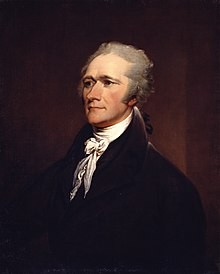
Early Life and Education: Alexander Hamilton, born on January 11, 1755, in Charlestown, the capital of the then British West Indies, emerged from humble beginnings. Orphaned as a teenager, his early life was marked by hardship, yet it was in this environment that his formidable intellect began to shine. Recognizing his extraordinary potential, local benefactors sponsored his education, allowing him to travel to the American colonies. There, he attended King’s College in New York City, laying the groundwork for his future as one of America’s founding fathers.
Political Ascendancy: Hamilton's political career was catalyzed by the American Revolution, where he served as an artillery captain and quickly gained the attention of General George Washington. His keen insight and aptitude for leadership led him to become Washington's aide-de-camp. After the war, Hamilton was instrumental in drafting the U.S. Constitution, advocating for a strong federal government that would drive the nation towards economic prosperity and stability.
Economic Visionary: As the first Secretary of the Treasury under President Washington, Alexander Hamilton established the nation’s financial system, creating a foundation for modern economic policy. His bold initiatives, including the establishment of a national bank and the promotion of manufacturing, were revolutionary. Hamilton's reports on the public credit and the national bank laid the groundwork for America's financial infrastructure, influencing economic thought for generations to come.
Legacy and Influence: Hamilton's enduring legacy is reflected not only in the institutions he established but also in his writings, including the Federalist Papers, which argued for the ratification of the Constitution. His life story, marked by ambition and intellect, has inspired countless works of art, literature, and theater, including the acclaimed musical "Hamilton." Today, Alexander Hamilton remains a central figure in discussions of American political and economic philosophy, his contributions shaping the nation’s trajectory long after his untimely death in 1804.