Early Life and Education: Arnold J. Toynbee was born on April 14, 1889, in London, England, into a well-educated family that fostered a rich intellectual environment. He attended the prestigious St. Paul's School before pursuing higher education at Balliol College, Oxford, where he earned a first-class degree in Greats. His academic prowess and interests in history, philosophy, and the humanities laid the groundwork for his future work as a historian and philosopher of history.
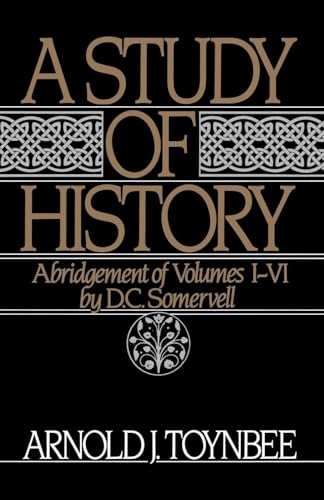
Career and Contributions: Toynbee's career was marked by his tenure at the London School of Economics and later at the University of London, where he held the position of professor of history. His most notable work, "A Study of History," published in multiple volumes between 1934 and 1961, presented a comprehensive analysis of the rise and fall of civilizations. Through his innovative approach, Toynbee examined the interactions between societies and their environments, proposing that challenges faced by civilizations could lead to either creativity or decline. This work remains a cornerstone in historiography, influencing scholars and thinkers across various disciplines.
Philosophy of History: Central to Toynbee's philosophy was the idea that history is shaped by the responses of societies to challenges. He introduced the concept of "creative minorities," arguing that the actions of a small group within a society could determine the fate of entire civilizations. This perspective not only challenged traditional historical narratives but also encouraged a deeper understanding of the dynamic interplay between culture, society, and the environment. His insights sparked debates and discussions that continue to resonate in contemporary historical discourse.
Legacy and Impact: Arnold J. Toynbee passed away on October 22, 1975, but his legacy endures through his influential writings and the thought-provoking questions he raised about human civilization. His work has inspired generations of historians, sociologists, and philosophers to explore the complexities of societal development and the factors that contribute to both triumph and tragedy in the human experience. Toynbee's contributions remain a vital part of the conversation about the trajectory of history and the lessons it holds for the future.