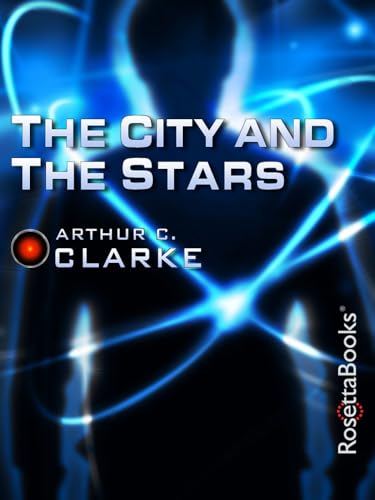
Early Life and Education: Arthur C. Clarke, born on December 16, 1917, in Minehead, Somerset, England, was a visionary author, futurist, and inventor. Growing up in a modest family, Clarke displayed an early fascination with science and technology. He pursued his education at Haileybury and Imperial Service College before enrolling at King’s College London, where he studied physics and mathematics, laying the groundwork for his future contributions to science fiction.
Literary Achievements: Clarke's literary career began in the 1940s, and he quickly established himself as a preeminent voice in science fiction. His most acclaimed work, "2001: A Space Odyssey," published in 1968, not only captivated readers but also influenced cinematic storytelling through its collaboration with director Stanley Kubrick. Clarke’s ability to blend complex scientific concepts with imaginative storytelling set a new standard in the genre, and his other notable works, including "Rendezvous with Rama" and "The Fountains of Paradise," further solidified his reputation as a masterful storyteller.
Innovative Ideas and Contributions: Beyond his literary endeavors, Arthur C. Clarke was a pioneering thinker whose ideas often foreshadowed technological advancements. He proposed the concept of geostationary satellites in a 1945 paper, a notion that became fundamental to modern telecommunications. His forward-thinking approach extended to themes of space exploration and artificial intelligence, reflecting his belief in the potential of humanity to transcend its limitations.
Legacy and Recognition: Clarke’s legacy is enshrined not only in his vast literary contributions but also in the profound impact he had on both science fiction and scientific discourse. He received numerous accolades, including the Hugo and Nebula Awards, and was knighted in 1998 for his services to literature and science. Arthur C. Clarke passed away on March 19, 2008, but his visionary ideas continue to inspire new generations of writers and scientists, ensuring his place as a titan in both literature and technological innovation.