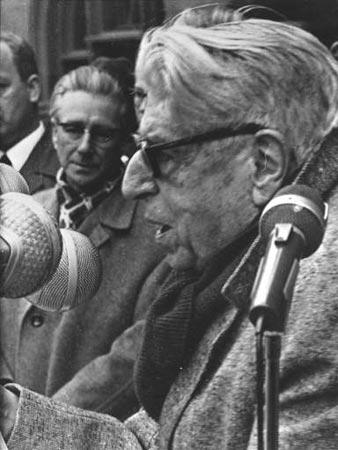
Early Life and Education: Ernst Bloch was born on July 8, 1885, in the small town of Ludwigshafen, Germany. Growing up in a Jewish family, he was profoundly influenced by the cultural and philosophical currents of his time. Bloch pursued his education at various universities, including the University of Freiburg and the University of Munich, where he immersed himself in philosophy, literature, and music. His early exposure to the works of Hegel, Marx, and German Romanticism laid the groundwork for his later intellectual pursuits.
Philosophical Contributions: As a philosopher, Ernst Bloch is best known for his development of "philosophy of hope," a concept that emphasizes the importance of utopian thinking and the potential for social change. His seminal work, "The Principle of Hope," explores the role of dreams and aspirations in shaping human experience. Bloch's writings challenge conventional philosophical thought by positing that hope is a driving force behind human progress. His unique blend of Marxism and existentialism distinguishes him as a pivotal figure in 20th-century philosophy.
Exile and Later Life: Bloch's critical stance against the rise of fascism in Germany led him to flee the country in 1933, ultimately settling in the United States. During his time in exile, he continued to write and engage with a new generation of thinkers. His experiences during this tumultuous period enriched his work, as he grappled with themes of dislocation, identity, and the struggle for social justice. After the war, he returned to Germany, where he became a prominent figure in the intellectual landscape of post-war Europe.
Legacy and Influence: Ernst Bloch's legacy is profound and enduring, influencing a diverse array of fields including philosophy, sociology, and political theory. His emphasis on the significance of hope and human aspiration resonates across disciplines, inspiring generations of thinkers and activists. Today, Bloch's work remains a vital touchstone for those seeking to understand the complexities of human experience and the transformative power of collective dreams. His writings continue to provoke thought and stimulate discourse, securing his place as a significant figure in modern philosophical thought.