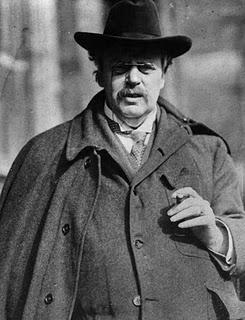
Early Life and Education: Gilbert K Chesterton, born on May 29, 1874, in London, England, grew up in an environment rich with cultural and intellectual stimuli. The son of a successful businessman, Chesterton was encouraged to explore his creativity from a young age. His education at St. Paul's School and later at the Slade School of Fine Art provided him with a foundation in both the visual and literary arts, which would profoundly influence his future work as a writer and thinker.
Literary Contributions: Chesterton's career as an author flourished in the early 20th century, where he became renowned for his wit, humor, and sharp social commentary. He authored numerous novels, essays, and poems, with his most famous work, "The Father Brown Mysteries," introducing readers to the astute detective, Father Brown. His ability to intertwine mystery and moral philosophy set him apart from his contemporaries, earning him a lasting place in the literary canon. Chesterton's eloquent advocacy for Christianity and traditional values resonated with many, making him a significant figure in religious literature.
Philosophical Insights: Beyond fiction, Chesterton's philosophical writings reveal a deep engagement with the complexities of human existence. He tackled topics ranging from the nature of faith to the intricacies of modernity, often challenging prevailing ideologies with his characteristic paradoxes and insightful observations. His works, such as "Heretics" and "Orthodoxy," invite readers to question societal norms and embrace a more profound understanding of truth and morality.
Legacy and Influence: Gilbert K Chesterton's legacy continues to thrive in contemporary literature and philosophy. His unique blend of humor and deep thought has inspired generations of writers and thinkers. As a public intellectual, he engaged in debates on various social issues, advocating for justice and compassion. Today, Chesterton is celebrated not only as a literary giant but also as a profound thinker whose insights remain relevant in discussions of faith, society, and the human condition.