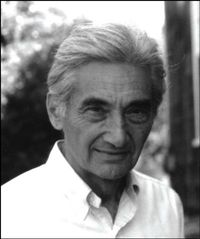
Early Life and Education: Howard Zinn was born on August 24, 1922, in Brooklyn, New York, to immigrant parents from Russia. Growing up in a working-class family, Zinn developed an early awareness of social inequalities. His experiences during World War II, where he served as a bombardier in the U.S. Army Air Forces, shaped his perspectives on war and justice. After the war, Zinn pursued higher education, earning a Bachelor’s degree from Brooklyn College and later a Ph.D. in history from Columbia University.
Academic Career and Activism: Zinn’s career as a historian began at Spelman College in Atlanta, where he taught for over a decade. His commitment to civil rights and social justice led him to become involved in the civil rights movement, where he actively supported activists and students fighting for equality. Zinn's teaching style was unconventional; he encouraged critical thinking and sought to instill a sense of activism in his students. His experiences and beliefs culminated in his influential work, "A People's History of the United States," published in 1980, which offered a narrative of American history from the perspective of marginalized groups.
Literary Contributions and Legacy: Howard Zinn authored numerous books, essays, and articles, establishing himself as a prominent voice in American historical discourse. His works, characterized by their engaging prose and commitment to social justice, challenge traditional narratives and advocate for the forgotten voices of history. Beyond "A People's History," Zinn's contributions include "You Can't Be Neutral on a Moving Train" and "A People's History of the New Class," each reflecting his dedication to activism and social change. His legacy endures, inspiring generations of readers and activists to question dominant narratives and seek justice.
Impact on Modern Discourse: Zinn's influence extends far beyond the realm of academia. His emphasis on the importance of grassroots movements and social justice continues to resonate in contemporary discussions about race, class, and power dynamics. By reexamining historical events through the lens of the oppressed, Zinn's work has encouraged countless individuals to engage in activism and advocacy. As a historian, educator, and activist, Howard Zinn's contributions remain a vital part of the ongoing conversation about equity and justice in society.