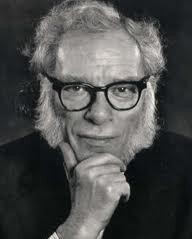
Early Life and Education: Isaac Asimov, born on January 2, 1920, in Petrovichi, Russia, moved to the United States with his family when he was a young child. Growing up in Brooklyn, New York, Asimov demonstrated an early affinity for reading and writing, often immersing himself in science fiction tales. He later earned a Bachelor’s degree in chemistry from Columbia University, followed by a Master’s and a Ph.D., which laid the foundation for his prolific writing career.
Literary Contributions: Asimov was a pioneering figure in the genre of science fiction, renowned for his imaginative storytelling and profound insights into the human condition. His most celebrated works include the "Foundation" series and the "Robot" series, which introduced concepts such as the Three Laws of Robotics, influencing both literature and real-world discussions on artificial intelligence. Asimov's ability to blend scientific principles with compelling narratives has earned him a permanent place in the literary canon.
Versatile Author and Science Communicator: Beyond fiction, Asimov was a prolific non-fiction writer, penning over 500 books on various subjects, including science, history, and literature. His engaging writing style made complex topics accessible to the general public, helping to cultivate a greater appreciation for science. Asimov's expertise and clarity positioned him as a prominent science communicator during his lifetime, and he remains a respected voice in discussions about scientific literacy.
Legacy and Influence: Isaac Asimov passed away on April 6, 1992, but his legacy endures through his extensive body of work and the lasting impact he made on science fiction and popular science. His visionary ideas continue to inspire countless authors, scientists, and thinkers, solidifying his status as one of the most significant figures in 20th-century literature. Asimov's works not only entertain but also provoke thought on the ethical implications of technology and humanity's future.