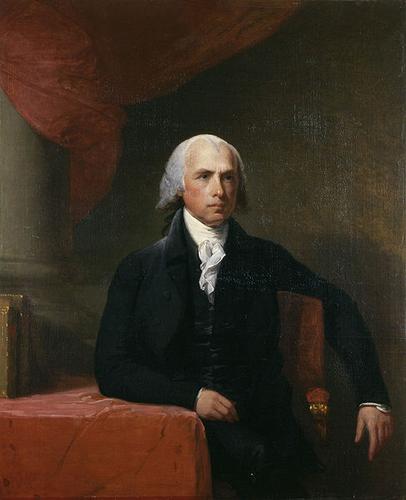
Early Life and Education: James Madison was born on March 16, 1751, in Port Conway, Virginia, into a prominent planter family. Growing up in an era marked by colonial unrest and the quest for independence, Madison's formative years were shaped by Enlightenment ideals and the burgeoning spirit of American democracy. He pursued his education at the College of New Jersey, now Princeton University, where he excelled in classical studies and developed a keen interest in political philosophy.
Political Career and Contributions: A crucial figure in the founding of the United States, James Madison played a pivotal role in shaping the nation’s early governance. Often referred to as the "Father of the Constitution," Madison's influence was instrumental during the Constitutional Convention of 1787. His advocacy for a strong federal government and the system of checks and balances laid the groundwork for the U.S. political system. Additionally, Madison co-authored the Federalist Papers, which defended the Constitution and articulated the principles of American democracy.
Legacy as a Statesman and Author: Madison's legacy extends beyond his constitutional contributions; he also served as the fourth President of the United States from 1809 to 1817. His leadership during the War of 1812 showcased his commitment to national sovereignty and unity. As an author, Madison’s writings reflect his deep understanding of governance and human rights, making him a respected figure in political literature. His insights on liberty, justice, and the role of government continue to resonate in contemporary political discourse.
Personal Life and Later Years: Despite his public achievements, Madison valued a quiet personal life. He married Dolley Payne Todd in 1794, and together they became known for their hospitality and social grace in Washington, D.C. After his presidency, Madison retired to Montpelier, his Virginia estate, where he continued to engage in public affairs and scholarship until his death on June 28, 1836. Madison's thoughtful contributions to American political thought and his steadfast dedication to democracy ensure his place as a cornerstone of American history.