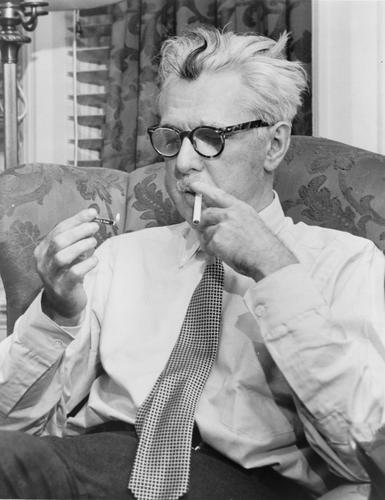
Early Life and Education: James Thurber was born on December 8, 1894, in Columbus, Ohio. Growing up in a vibrant, bustling household as one of five children, he was exposed to a wealth of stories and experiences that would later inform his writing. Despite facing challenges from a young age, including the loss of vision in one eye due to a childhood accident, Thurber's innate creativity flourished. He attended The Ohio State University, where he initially studied architecture but soon found his passion for writing and humor, leading him to become a significant figure in American literature.
Career and Achievements: Thurber’s literary career took off in the 1920s when he began contributing to The New Yorker, where his unique blend of humor and insightful commentary quickly garnered attention. His works often featured whimsical illustrations, which added a distinct flair to his storytelling. Over the years, he published numerous short stories, essays, and cartoons, with notable works like "The Secret Life of Walter Mitty" captivating audiences. Thurber's keen observations of human nature and societal quirks resonated with readers, solidifying his reputation as a master of satire and wit.
Legacy and Influence: James Thurber's influence extends beyond his own writings; he inspired generations of writers and humorists. His ability to capture the absurdities of everyday life and present them with a playful yet poignant touch has left an indelible mark on American literature. His insights into relationships and the human condition continue to be relevant, making his work a staple in literary studies and humor anthologies.
Later Years and Commemoration: Thurber continued to produce work until his later years, despite his declining health. He passed away on November 2, 1961, leaving behind a legacy that remains vibrant in contemporary culture. Today, his contributions are celebrated in various forms, from literary adaptations to academic discussions, ensuring that James Thurber's voice endures in the hearts and minds of readers worldwide.