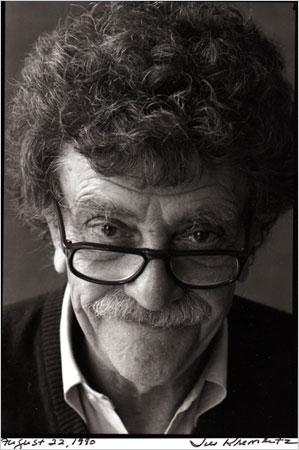
Early Life and Education: Kurt Vonnegut, born on November 11, 1922, in Indianapolis, Indiana, emerged from a family steeped in German heritage. His formative years were marked by the tumult of the Great Depression, which shaped his worldview and artistic sensibilities. Vonnegut attended the prestigious Shortridge High School, where he honed his skills in writing and journalism before graduating to serve in World War II. After the war, he pursued higher education at the University of Chicago, where he studied anthropology, a field that would later influence his narrative style and thematic exploration.
Literary Breakthrough: Vonnegut's literary career took flight in the 1950s with the publication of his first novel, Player Piano. However, it was his 1969 masterpiece, Slaughterhouse-Five, that solidified his reputation as a groundbreaking author. This novel, blending science fiction and autobiography, explores the absurdities of war and the nature of time, resonating deeply with readers and critics alike. Vonnegut's distinctive voice, characterized by dark humor and sharp social critique, set him apart from his contemporaries, allowing him to forge a unique path in American literature.
Themes and Style: Throughout his career, Kurt Vonnegut grappled with complex themes such as free will, the human condition, and the often absurd nature of existence. His works, including Cat's Cradle and Breakfast of Champions, frequently employed metafictional techniques, challenging conventional narrative forms. Known for his succinct prose and vivid imagery, Vonnegut's writing often reflects a deep empathy for humanity, marked by a blend of irony and earnestness that invites readers to contemplate their own lives and societal structures.
Legacy and Influence: Kurt Vonnegut's impact on literature extends far beyond his published works. His unique blending of genres and unflinching exploration of difficult themes have inspired countless writers and artists. He remains a significant figure in American literature, whose insights into the human experience continue to resonate in contemporary discourse. Vonnegut passed away on April 11, 2007, but his legacy endures through his timeless narratives that challenge us to question our realities and embrace the absurdity of life.