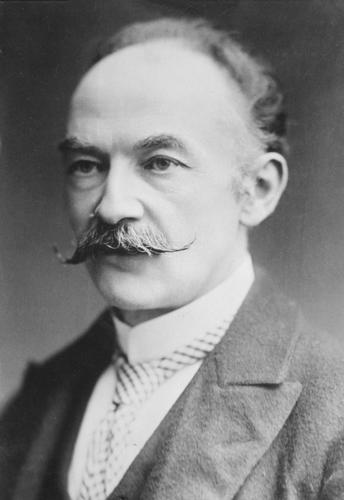
Early Life and Education: Thomas Hardy, born on June 2, 1840, in Higher Bockhampton, Dorset, England, was a luminary of English literature whose works have left an indelible mark on both poetry and prose. Growing up in a rural environment, Hardy was deeply influenced by the landscapes and social structures of his native Wessex, which later became the setting for many of his novels. His early education was somewhat sporadic, but he showed an early affinity for literature, which would ultimately guide him on his path to becoming a renowned author.
Literary Career and Themes: Hardy's literary career began in earnest in the late 19th century, with his first novel, Desperate Remedies, published in 1871. He is best known for his exploration of the human condition, often delving into themes of fate, social constraints, and the struggle between individual desires and societal expectations. Notable works such as Tess of the d'Urbervilles and Jude the Obscure reveal Hardy’s profound empathy for his characters, often depicting the tragic consequences of their choices against a backdrop of deterministic forces.
Poetry and Later Works: In addition to his novels, Hardy was a prolific poet, with his poetry often reflecting his philosophical musings and deep emotional landscape. His later poetry, especially works written in the wake of personal loss, showcases a maturity and depth that resonates with readers. Hardy's poetic voice is marked by a lyrical quality and an acute observation of nature, society, and the passage of time, allowing him to bridge his earlier prose with a more introspective style.
Legacy and Influence: Thomas Hardy passed away on January 11, 1928, leaving behind a rich legacy that continues to influence writers and readers alike. His candid portrayals of Victorian society and his innovative narrative techniques have cemented his place as one of the foremost figures in English literature. Today, Hardy's works are celebrated not only for their storytelling but also for their profound insights into human nature, ensuring that his literary contributions remain relevant in contemporary discourse.