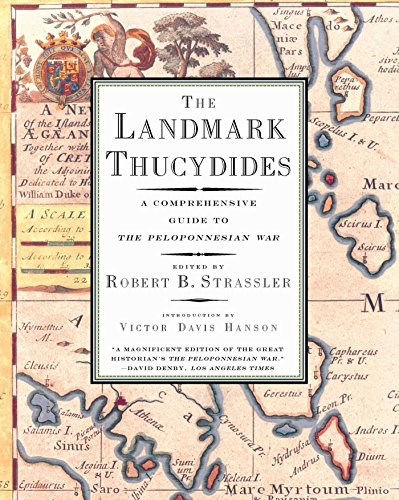
Early Life and Background: Thucydides, an ancient Greek historian born around 460 BC, is best known for his critical study of the Peloponnesian War, which provides a meticulous account of the conflict between Athens and Sparta. Hailing from an affluent Athenian family, his background afforded him access to education and political life, which would greatly influence his work. Thucydides' experiences as a general during the war imbued him with firsthand knowledge of the complexities of warfare and governance, setting the stage for his later historical analyses.
Historical Contributions: Thucydides is often heralded as the father of scientific history due to his rigorous methods and emphasis on rationality over myth. Unlike his predecessor Herodotus, who incorporated folklore and anecdote into his narratives, Thucydides focused on factual accuracy, primary sources, and critical inquiry. His seminal work, "History of the Peloponnesian War," is a detailed chronicle that not only narrates events but also delves into the underlying political and social dynamics. His insights into power, justice, and human nature remain relevant, influencing historians and political theorists for centuries.
Philosophical Influence: Thucydides’ exploration of human behavior and governance transcends mere historical record; it serves as a philosophical treatise on the nature of power and conflict. His realistic portrayal of the motivations behind war and peace reflects a profound understanding of human psychology. Concepts such as the "Thucydides Trap," which examines the tensions between rising and established powers, continue to resonate in contemporary discussions of international relations.
Legacy and Recognition: The legacy of Thucydides is enduring, as his work laid fundamental groundwork for both historical writing and political theory. Scholars and students alike regard his analysis of the Peloponnesian War as a classic, and his methodologies are taught in academic institutions worldwide. In a modern context, his insights into the interplay of ambition, fear, and honor in politics remain pertinent, solidifying his status as a pivotal figure in the study of history and human behavior.