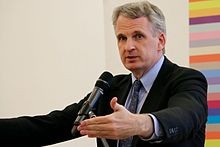
Early Life and Education: Timothy Snyder, an esteemed historian and author, was born in the United States and has made significant contributions to the fields of history and political science. He graduated from Brown University with a Bachelor of Arts in History and went on to earn his Ph.D. from the University of Oxford. His academic journey laid a solid foundation for his exploration of European history, particularly concerning Central and Eastern Europe.
Academic Career and Research: Snyder is currently a professor at Yale University, where he specializes in modern European history. His research delves into complex themes such as nationalism, totalitarianism, and the intricacies of power dynamics in Eastern Europe during the 20th century. His rigorous scholarship has not only enriched the academic community but has also provided valuable insights into contemporary political issues. Snyder’s work often emphasizes the importance of historical context in understanding current events, making his contributions particularly relevant today.
Published Works and Impact: As an accomplished author, Timothy Snyder has penned several influential books, including Bloodlands: Europe Between Hitler and Stalin and On Tyranny: Twenty Lessons from the Twentieth Century. His writings are characterized by a compelling narrative style that combines deep historical analysis with urgent political commentary. Snyder's ability to connect historical events with modern dilemmas has resonated with a wide audience, prompting discussions about democracy, freedom, and human rights.
Public Engagement and Influence: Beyond academia, Snyder is a prominent public intellectual, frequently contributing to major publications and engaging in public discourse on democracy and authoritarianism. His insights are sought after in various forums, where he advocates for a critical understanding of history as a means to safeguard democratic values. Through lectures, essays, and interviews, he continues to inspire individuals to reflect on the lessons of the past and their implications for the future.
Conclusion: Timothy Snyder stands out as a leading voice in historical scholarship, blending rigorous research with a passionate commitment to the principles of democracy. His work not only informs but also empowers readers to engage with the complexities of history and its relevance in today's world.