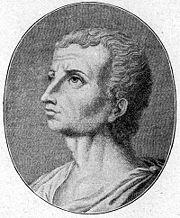
Early Life and Background: Titus Livius, often known simply as Livy, was born in 59 BCE in the ancient Roman town of Patavium, present-day Padua, Italy. Growing up in a relatively affluent family, Livy was afforded the opportunity to pursue a comprehensive education. His studies included rhetoric, philosophy, and history, which would later profoundly influence his literary works. Livy's formative years were marked by the political turbulence of the late Roman Republic, shaping his perspectives on governance and society.
Literary Contributions: Livy's most significant contribution to literature is his monumental work, "Ab Urbe Condita," which chronicles the history of Rome from its legendary foundation to the early days of the Roman Empire. Comprising 142 books, of which only a fraction survives, this historical narrative is renowned for its vivid storytelling and analytical depth. Livy's approach combined rigorous research with a narrative style that brought historical events to life, engaging readers through both factual account and moral reflection. His works not only served as historical documentation but also as a guide to virtuous living, emphasizing themes such as moral integrity and civic responsibility.
Philosophy and Influence: Beyond mere historical recounting, Titus Livius infused his writings with philosophical underpinnings that reflected his views on human nature and the cycles of history. He believed that history served as a teacher for future generations, imparting lessons on the consequences of moral decay and the importance of virtues such as bravery and loyalty. Livy’s influence extended beyond his time; his writings inspired countless historians and thinkers throughout the ages, from the Renaissance to modern historical discourse.
Legacy and Recognition: Despite the passage of centuries, the works of Titus Livius continue to hold a significant place in classical literature. His blend of narrative and analysis has earned him recognition as one of Rome's preeminent historians. Today, scholars and enthusiasts alike turn to Livy for insights into the complexities of human character and the intricate tapestry of Rome's history, securing his legacy as a cornerstone of historical literature.